Aging in Place in Colorado: A Caring Guide to Staying Safely in Your Home
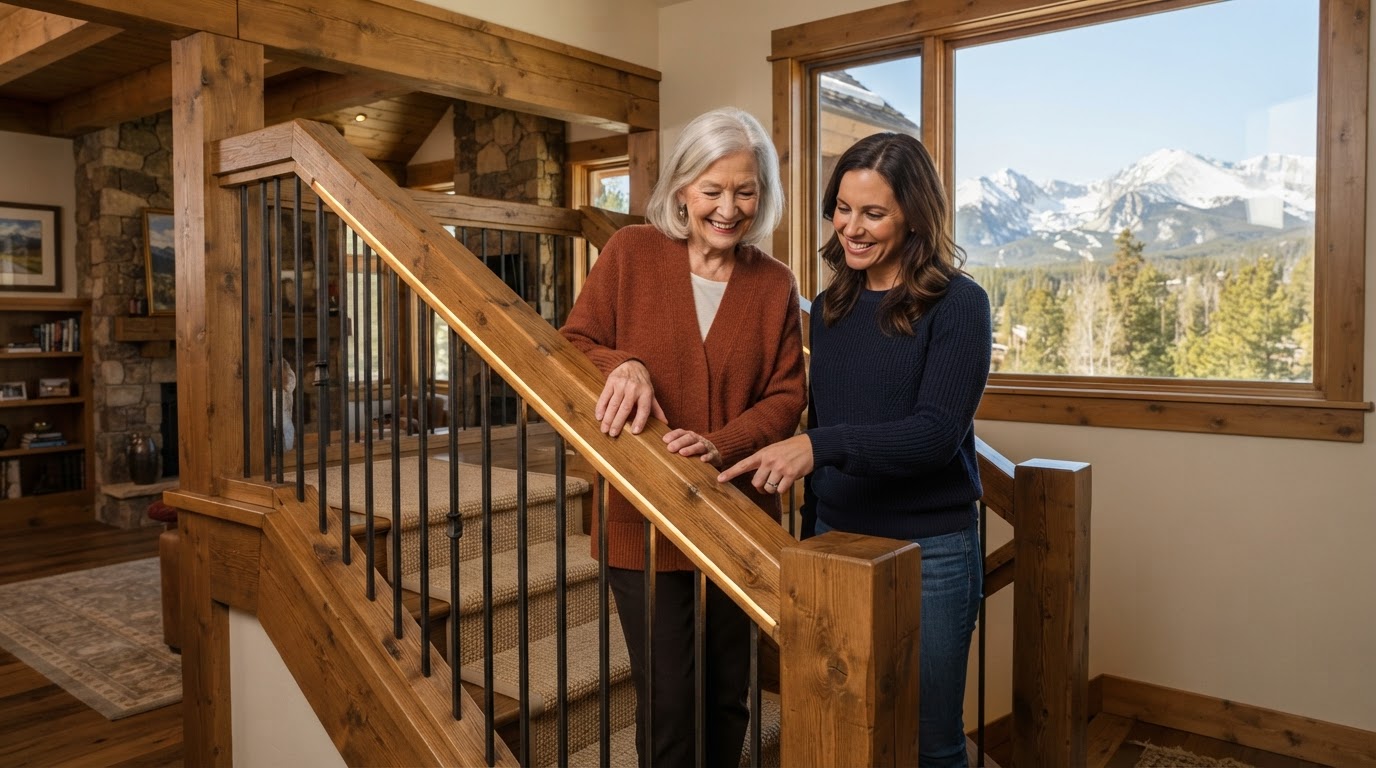
Most of us want to stay home. Staying safely takes a plan.
Home is where the good chair is, where the neighbors wave, and where you know which stair creaks. It is no surprise that when AARP asked in its 2024 Home and Community Preferences Survey, 75% of adults 50 and older said they want to remain in their current homes as they age.
The wish is easy. The follow-through is harder. Stairs get steeper, the bathtub gets taller, the driveway gets icier, and the house starts to ask more of you than it used to. If you are a senior thinking about staying put, or an adult child lying awake after a phone call that Mom “almost fell again,” this guide is for you.
It explains what aging in place means, who it works for, how to check a home room by room for safety (including stairs, steps, loose rugs and bathtub openings), what is different about aging in place in Colorado, how to pay for changes, and how to know if staying is still the right choice. It also points you to our Aging in Place page and to our complimentary home safety walkthrough.
The short answer: to age in place safely in Colorado, follow these six steps.
- Look at the home through new eyes. Walk every room, the entry and the outdoors, and write down what could cause a fall.
- Fix the biggest fall risks first. Stairs, loose rugs, poor lighting and the bathroom cause most of the trouble.
- Add support, not just gadgets. Grab bars, handrails, a medical alert system and help with errands and meals.
- Plan for Colorado. Ice and snow, radon, wildfire smoke and multi-level floor plans all affect safety here.
- Line up the money and the help. Some Colorado programs offer free repairs, and Medicaid may help some people pay for modifications.
- Decide ahead of time what would make staying unsafe. Having a plan makes any later move calmer and less rushed.
What is aging in place?
Aging in place means continuing to live in your own home and community as you get older, safely and comfortably, with the changes and support you need. It does not mean doing everything alone or never moving. It means making the home work for you for as long as it reasonably can.
Aging in place usually combines three things:
- A safer, more accessible home, with changes such as better lighting, handrails, grab bars and no-step entries
- Support services, such as home care, meal delivery, rides, a housekeeper or a medical alert system
- A backup plan, so that if health changes, there is already a path forward
For some people, aging in place lasts many years. For others it is a bridge while the family explores assisted living or a smaller home. Both are reasonable.
Who is aging in place for?
Aging in place tends to work best for people who are attached to their home, have a safe or fixable house, and have help they can count on. It is not only for the healthy. Many people with chronic conditions stay home successfully with the right setup.
| It may be a good fit when | It may be time to look at other options when |
|---|---|
| The home is safe or can be made safe at a reasonable cost | The home cannot be made safe, such as multiple flights of stairs with no first-floor living option |
| Your loved one is steady, oriented and can manage daily tasks with some help | Falls are frequent, or memory loss means wandering or unsafe behavior |
| Family, friends or neighbors are close by and willing to help | The caregiver is exhausted, sick or far away |
| Paid help is affordable and available where you live | Needs are growing past what home care can provide |
| Staying put is what the senior truly wants | Isolation or loneliness is hurting health and spirits |
If memory loss is part of the picture, read our guide to choosing memory care as well. There is no shame in changing the plan when needs change.
Why this matters in Colorado
Colorado is aging fast, and staying home is how most older Coloradans plan to live. Adults 65 and older made up just over 16% of the state’s population in 2023, up from under 10% in 2000, according to Colorado Politics reporting on state demographers’ data. The Common Sense Institute projects that share to reach about 19% by 2030 and 21% by 2050. About 600,000 older Coloradans are already cared for by family and friends.
Falls are the biggest threat to staying home. The CDC reports that more than 14 million older adults, or 1 in 4, fall each year, and falls are the leading cause of fatal and nonfatal injury for adults 65 and older. The good news is that many falls are preventable.
How to evaluate your home for safety: what to look for
The best way to check a home is to walk through it slowly, one room at a time, and picture it on your worst day: tired, in the dark, or carrying a laundry basket. The CDC’s free Check for Safety checklist uses the same room-by-room approach. Bring a family member, a friend, or an occupational therapist if you can. Our own complimentary walkthrough (described below) is another option.
Start outside: entries, steps and walkways
- Steps to the front door. Are they even and solid, with a sturdy handrail on both sides? A single step can be as risky as a full flight.
- Walkways and driveway. Look for cracks, heaving concrete and loose pavers. Colorado’s freeze and thaw cycles make these worse.
- Lighting. The path from the car to the door should be lit, ideally with motion sensors.
- Ice and snow. Who shovels, and how fast? Plan for it before the first storm.
- Mailbox, trash cans and garage. Can they be reached without going down steps?
Stairs and steps inside
Stairs are the single most important place to check.
- Handrails on both sides, firmly attached and running the full length of the stairs
- Lighting at the top and bottom, with switches at both ends
- Loose, worn or uneven treads, or carpet that is not firmly secured. Replace it or add non-slip treads
- Clutter. Nothing should be stored or set down on stairs
- Contrast. A strip of bright or contrasting tape on the edge of each step helps people with weaker vision
- Sleeping and living levels. Can a person live on one floor, with a bedroom, bathroom and laundry? Many Colorado homes are split-level, tri-level or have basement bedrooms and laundry, so this deserves a close look
Floors and walkways
- Loose throw rugs are a classic trip hazard. Remove them or secure them with non-slip backing
- Cords and wires across walkways
- Thresholds and transitions between rooms or flooring types
- Clutter and low furniture along main paths
- Slippery surfaces, especially polished wood or tile when wearing socks
Bathrooms
Bathrooms combine water, hard surfaces and urgent trips at night, so they deserve special attention.
- Tub and shower openings. A high tub wall is hard to step over. Consider a shower with a low or no threshold, a bath bench or a tub transfer bench
- Grab bars by the toilet and in the tub or shower, anchored into wall studs. A towel bar is not a grab bar
- Non-slip mats or strips inside the tub and outside it
- Toilet height. A raised seat or comfort-height toilet makes standing up easier
- Water temperature. Set the water heater to a safe temperature to prevent scalds
- Night lights along the path from the bedroom to the bathroom
Bedrooms
- A lamp within reach of the bed and a clear, lit path to the bathroom
- A bed at a height where feet rest flat on the floor
- A phone, medical alert button and a flashlight within reach
Kitchen and laundry
- Move everyday items to waist or shoulder height so no one reaches high or bends low
- Use a sturdy step stool with a handrail, never a chair
- Check that the stove has automatic shut-off if memory is a concern
- If the laundry is in a basement, consider moving it upstairs
Doors, lighting and emergency readiness
- Doorways and halls. Are they wide enough for a walker or wheelchair if needed? Lever handles are easier than knobs
- Light bulbs and switches. Use brighter, glare-free bulbs, and add lighting in dark corners and hallways
- Smoke and carbon monoxide alarms on every level, tested regularly
- Emergency plan. Keep medications, a spare key, emergency contacts and a list of medical conditions somewhere easy to find
A quick-reference home safety table
| Where | What to look for | A common fix |
|---|---|---|
| Entry and porch | Uneven steps, no handrail, poor lighting | Repair steps, add rails on both sides, add motion lighting, add a ramp or no-step entry if needed |
| Interior stairs | Missing rail, loose carpet, dim light, clutter | Install a second rail, secure carpet or add treads, add switches at both ends |
| Hallways and living areas | Throw rugs, cords, furniture in the path | Remove rugs, reroute cords, rearrange furniture |
| Bathroom | High tub opening, slippery floor, no grab bars | Walk-in shower or tub cut-out, grab bars, non-slip surfaces, raised toilet seat |
| Bedroom | Dark path to the bathroom, bed too high or low | Night lights, bedside lamp, adjust bed height |
| Kitchen | Items stored high or low, unsafe stool | Reorganize storage, use a stool with a handrail |
| Whole home | No alarms, no emergency plan | Smoke and CO alarms, a medical alert system, an emergency contact list |
Colorado-specific things to check
Some of the biggest risks to older Coloradans at home do not appear on a generic checklist.
| Colorado factor | Why it matters | What to do |
|---|---|---|
| Ice and snow | Slippery steps, driveways and walkways are a common cause of winter falls | Arrange snow removal in advance, use ice melt, keep rails clear, and wear shoes with good traction |
| Radon | Radon is a cancer-causing gas. The state health department says about half of Colorado homes have radon at or above the EPA’s action level of 4 pCi/L | Test the home. The state points to low-cost kits at sosradon.org. Retest after any repairs |
| Wildfire and smoke | Smoke can worsen breathing and heart conditions, and evacuation is harder with limited mobility | Make an evacuation plan with transportation, medications and oxygen. Keep the area around the home clear |
| Altitude and dry air | Dehydration, dizziness and dry skin are more common | Keep water handy, discuss medications with the doctor, and use a humidifier if advised |
| Multi-level homes | Split-levels, tri-levels and finished basements are common | Plan for main-floor living or consider a stair lift |
| Extreme temperatures | Heating bills and cooling costs can strain a fixed income | Look into the Low-income Energy Assistance Program (LEAP, November 1 to April 30, 1-866-HEAT-HELP) and ask about weatherization |
Smart changes that make a big difference
You do not need a remodel to make a home much safer. Many of the best fixes are simple and low-cost.
- Lighting. Brighter bulbs, motion-sensor lights, night lights and lit switches
- Grab bars and rails. Properly anchored, they are among the most effective changes
- Remove trip hazards. Rugs, cords, clutter
- Non-slip surfaces and treads
- A medical alert system with fall detection, especially for someone who lives alone
- A smart doorbell or video camera, so family can check in and visitors can be seen
- A shower seat, a raised toilet seat and lever handles
- A no-step or ramped entry if steps are a problem
- A first-floor bedroom and bath, or a stair lift if there is no other option
Larger projects, such as a curbless shower, wider doorways or a ramp, can cost more and should be done by experienced contractors. Always get written quotes and check licensing, insurance and references. Be careful of door-to-door offers and pressure to sign quickly.
Who pays for home modifications and support in Colorado?
Medicare does not generally pay for home modifications, but several Colorado programs can help. Availability changes, so always confirm with the organization.
| Source | What to know |
|---|---|
| Private pay | Many families pay out of pocket. Start with the highest-risk fixes |
| Free and low-cost repair programs | Nonprofits such as Brothers Redevelopment and Rebuilding Together Colorado, and the Volunteers of America handyman program, may help eligible older adults. Service areas and income limits vary. See our Helpful Senior Resources page |
| Health First Colorado (Medicaid) home modification benefit | Available through certain home- and community-based waivers, including the Elderly, Blind and Disabled waiver, with a $14,000 lifetime maximum per the state health care agency. It covers items such as ramps, bathroom modifications and wider doorways. Strict eligibility applies |
| Area Agency on Aging | Can connect you to programs and benefits. In the Denver metro area, call DRCOG at 303-480-6700. Elsewhere in Colorado, dial 2-1-1 |
| Veterans benefits | Veterans may qualify for home-modification grants and for Aid and Attendance. A County Veterans Service Officer helps at no cost |
| Senior property tax exemption | Homeowners 65 or older who have owned and lived in the home for 10 consecutive years can have 50% of the first $200,000 of actual value exempt from property tax. Apply with the county assessor by July 15 |
For the Medicaid home modification benefit, a physical or occupational therapist completes an evaluation, and the case manager requests bids. Ask your local case-management agency how to start.
What aging in place costs, and how to compare it
The real cost of staying home is more than the mortgage. Count property taxes, insurance, utilities, maintenance, snow removal, yard care, transportation, meals and any paid help. Then compare it with the actual price of an alternative, such as assisted living (a 2025 CareScout median of about $6,584 a month in Colorado) and one-time moving costs.
Use real bills and written quotes, not guesses. A financial advisor or your Area Agency on Aging can help you build a realistic budget. Our Aging in Place page also walks through the cost categories.
When aging in place stops working: signs to watch for
Staying home is a good plan until it isn’t. Review the plan after any fall, hospital stay or change in memory. Signs to take seriously:
- More than one fall, or a fall with injury
- Missed medications, weight loss or an empty refrigerator
- Unopened mail, unpaid bills or scams
- Wandering, getting lost or leaving the stove on
- A caregiver who is overwhelmed or ill
- Growing isolation or depression
None of these means failure. They mean it is time to add help or revisit the options, which may include downsizing, a 55+ community, assisted living or memory care.
Our complimentary home safety walkthrough
Ross King offers a complimentary Home Safety Walkthrough for seniors and families. It is a conversation and a visual review of your entryways, stairs, lighting, flooring, bathrooms and walking paths, with ideas for what to fix first. Ross, a Seniors Real Estate Specialist (SRES®), made many of these same changes to his own 92-year-old mother’s home, including better lighting, grab bars, stair gates and a bathtub cover. He knows how much peace of mind a few simple changes can bring.
Please note that the walkthrough is not a home inspection, a medical assessment or a safety guarantee, and Ross does not provide medical, legal or financial advice. If you want a clinical review, ask your doctor for an occupational therapy home evaluation.
If it turns out that staying is no longer the right choice, we can also help with the real estate side: whether to update, sell or move, and how the home’s value affects your options. There is never any pressure.
Frequently asked questions about aging in place in Colorado
What does aging in place mean?
What are the most important home safety changes for seniors?
How can I tell if my home is safe for an older adult?
Are stairs a problem for aging in place?
How do I make a bathroom safer for a senior?
Does Medicare pay for home modifications in Colorado?
Where can I find free or low-cost help for home repairs in Colorado?
What Colorado-specific risks should I plan for at home?
How much does aging in place cost compared with assisted living?
Is there property tax relief for seniors who stay in their homes?
When is it time to consider moving instead of staying home?
Should I stay or sell? Can a real estate professional help me decide?
Take the next step, one small change at a time
You do not have to fix everything this week. Pick one thing, such as a handrail, a night light or a call to your local Area Agency on Aging, and start there.
Where to start
- Schedule a walkthrough. Contact Ross at (303) 548-4300 to schedule a complimentary Home Safety Walkthrough.
- Learn more about aging in place. Visit our Aging in Place page.
- Find free help. Browse our Helpful Senior Resources, organized by what you need.
- Helping a parent from afar? Start with Helping a Parent or Loved One.
- Thinking about a move? See our Downsizing page.
This article is for general education only. It is not medical, legal, financial or tax advice, and Ross King is a licensed Colorado real estate broker, not an attorney, financial advisor, clinician or contractor. Costs, programs and availability change, so confirm current information directly with each organization.
Sources
- King Real Estate Group: Aging in Place
- King Real Estate Group: Helpful Senior Resources
- AARP: 2024 Home and Community Preferences Survey (press release)
- CDC: Older Adult Falls Data
- CDC STEADI: Check for Safety brochure
- Health First Colorado: Home Modification Benefit
- CDPHE: State health officials recommend radon testing
- Colorado Politics: A graying Colorado (May 2025)
- Common Sense Institute: Aging into the Future (July 2025)
- CareScout Cost of Care Survey 2025